
Fixed and combination appliances
Orthodontics beyond clear aligners
When a case needs more than removable aligners, we plan braces, accelerated treatment or a combination around your bite, your timeline and your daily life. This page explains how orthodontics works in general and which options exist.
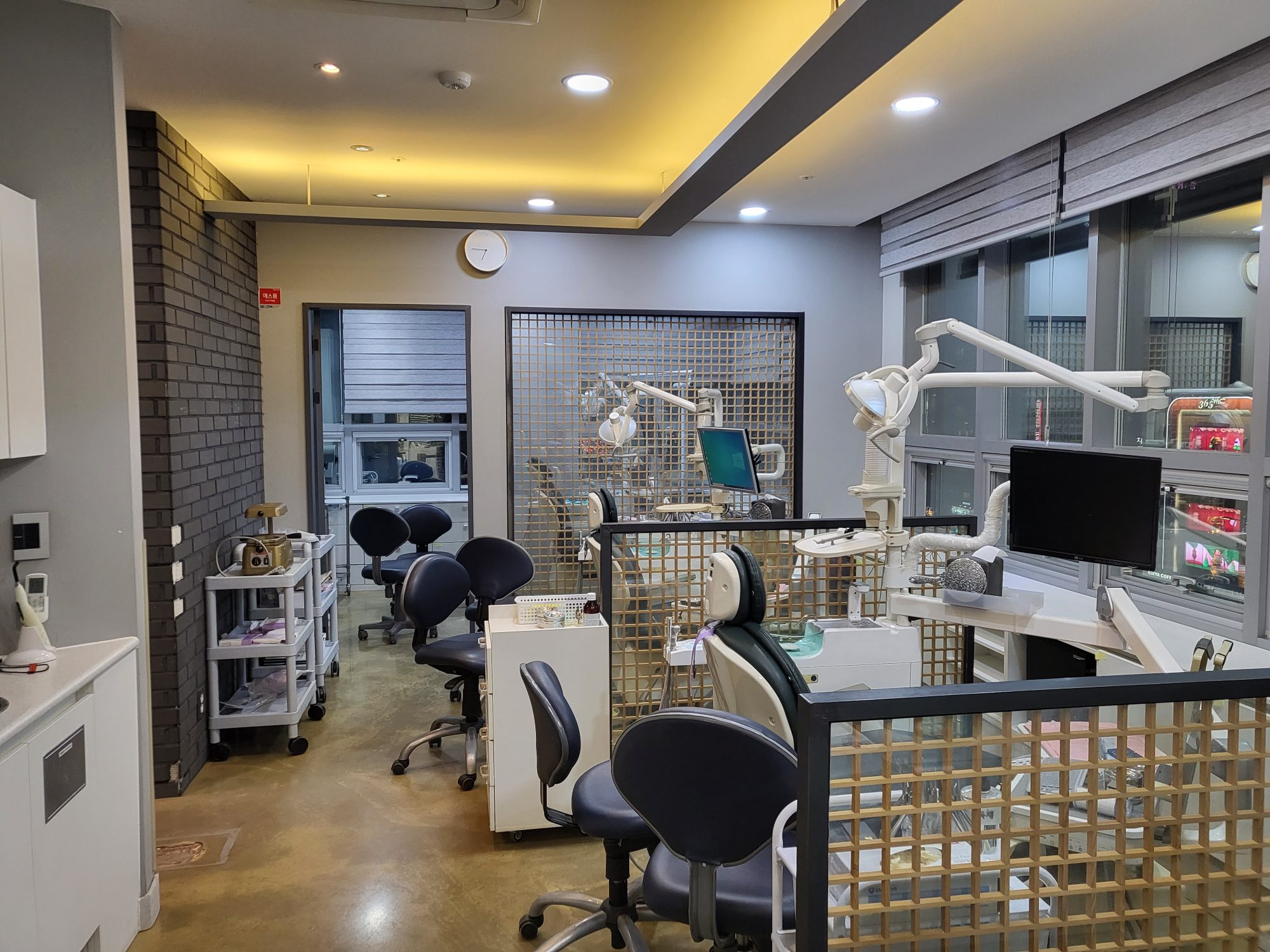
Why plan orthodontics with us
Digital diagnosis first
Intraoral scanning and X-rays map your bite before we recommend an appliance, rather than starting with one system by default.
Planned by an orthodontics-trained dentist
Dr. Sounhi Lee trained in orthodontics at Korea University Graduate School of Dentistry and developed the AMIsalign aligner system. The dentist who plans your case is the one who treats you.
A plan you can read
You see the proposed appliance, the expected course of treatment and an estimated timeline before you commit.
Who we usually assess for fixed or combined appliances
Whether braces, a combination appliance, or clear aligners instead, suit your case is decided only after an examination.
More severe crowding
Cases where tooth movement needed is beyond what removable aligners alone can manage well.
Extraction cases
Cases where teeth are removed first to create space for the remaining teeth to move into.
Protrusion and jaw-relationship problems
Cases where the bite problem comes partly from jaw position, and corticotomy-assisted (mini-orthognathic) treatment or anchorage with mini-implants is considered.
Growing children and teens
Cases where growth can be guided with an appliance suited to a developing bite.
How treatment works
Consultation and diagnosis
Examination, digital scan and X-rays to map your bite and discuss which appliance fits your case.
Treatment plan
You review the proposed appliance, the planned sequence and an estimated timeline before treatment starts.
Active treatment
Regular adjustment visits to move teeth into position; visit frequency depends on the appliance and your plan.
Finishing and retention
Bite and alignment are finalized, appliances are removed, and a retainer is fitted to help hold the result.
How orthodontic treatment works
Orthodontics moves teeth and, in growing patients, guides jaw growth to improve how the teeth meet, how they can be cleaned and how they look.
Teeth move through bone
A light, steady force on a tooth causes bone on one side of the root to resorb and new bone to form on the other side. The tooth moves a fraction of a millimetre at a time; the bone around it remodels and follows.
Force must be gentle and continuous
Heavier force does not move teeth faster. It can damage the root and the bone. This is why appliances are adjusted in small steps over months.
Three things are planned together
The position of each tooth, the way the upper and lower teeth meet (the bite), and the profile of the lips and chin. A good result balances all three, not only straight front teeth.
Health benefits, not only appearance
Well-aligned teeth are easier to clean, wear more evenly and put less uneven load on the jaw joints. Crowding, deep bites and crossbites can cause wear, gum recession or chipped teeth over the years.
Common bite problems orthodontics treats
Most people have more than one of these at once. Which ones matter for you, and in what order, is decided at the examination.
Crowding
Not enough space in the arch, so teeth overlap or rotate. The most common reason people seek treatment; sometimes solved by expanding the arch or reshaping, sometimes by removing teeth.
Spacing and gaps
Gaps between teeth, often between the upper front teeth (diastema). Teeth are moved together and the result is held with a retainer.
Protrusion (overjet)
Upper front teeth sit too far ahead of the lower ones, often with lips that do not close at rest. Treated by moving front teeth back, frequently after removing premolars.
Underbite (Class III)
Lower front teeth sit in front of the upper ones because of tooth position, jaw size, or both. Growth guidance in children and camouflage or corticotomy-assisted treatment in adults are the usual approaches.
Deep bite
Upper front teeth cover most or all of the lower front teeth. Can wear the lower teeth and the gum behind the upper teeth; corrected by levelling the arches.
Open bite
Front teeth do not touch when the back teeth are closed, making it hard to bite food. Often linked to tongue posture or thumb-sucking in childhood.
Crossbite
One or more upper teeth bite inside the lower teeth, at the front or the side. Can shift the jaw to one side and wear teeth unevenly.
Midline shift and asymmetry
The centre line of the upper and lower teeth does not match, or the jaw is shifted. Corrected with asymmetric mechanics such as elastics or mini-implants.
Types of orthodontic appliances
All fixed appliances work on the same principle: brackets bonded to the teeth hold a shaped wire, and the wire's tendency to return to its shape moves the teeth. The options differ in what they are made of, where they sit and how the wire is held.
Metal braces
Stainless-steel brackets and wires. The smallest brackets and the widest range of mechanics; the most visible option.
Ceramic braces
Tooth-coloured brackets with a metal or coated wire. Less visible than metal; slightly larger and more brittle, so they suit most but not every case.
Self-ligating braces (Clippy-C, Damon)
A small clip or door on each bracket holds the wire instead of elastic ties. Fewer ties means less friction and no stained elastics; adjustment intervals are often longer.
Lingual braces
Brackets bonded to the inside (tongue side) of the teeth, so nothing shows from the front. Custom-made for each patient; speech and tongue comfort take a few weeks to adapt.
Clear aligners (AMIsalign)
A series of removable transparent trays, each moving the teeth a small step. Removable for eating and cleaning; relies on wearing them about 20 hours a day.
Mini-implants (TAD)
Temporary screws a few millimetres long placed in the jawbone as a fixed anchor, so teeth can be pulled back, intruded or moved without unwanted movement of other teeth. Removed when no longer needed.
Accelerated and corticotomy-assisted treatment
A minor surgical procedure on the bone around the teeth that temporarily speeds up bone remodelling, used with braces or aligners to shorten certain treatments.
Retainers
Not a treatment appliance but part of every plan: a thin bonded wire or a removable tray that holds the teeth in their new position after the braces come off.
What a typical course looks like
Durations below are general ranges for orthodontic treatment, not a promise for your case. Growing patients, extraction cases and bite corrections usually take longer than simple alignment.
Records and planning: 1 to 2 visits
Scan, photos and X-rays, then a planning appointment to go through options.
Levelling and aligning: first 3 to 6 months
Thin, flexible wires straighten the teeth within each arch. Most of the visible change happens here.
Space closure and bite correction: the middle months
Stiffer wires, elastics and sometimes mini-implants move groups of teeth and correct how the arches meet. Progress is slower and less visible.
Finishing: the last 2 to 4 months
Small adjustments to the position of individual teeth and the bite before the appliance is removed.
Retention: from the day the braces come off
Full-time retainer wear at first, then nights only. Teeth tend to drift back for years, so some retainer use continues long term.
Living with braces
Fixed appliances trap food and plaque, so cleaning takes a few minutes longer. These habits protect the teeth and gums during treatment.
- Brush after every meal, angling the brush above and below each bracket; an interdental brush cleans under the wire.
- Use fluoride toothpaste and, if advised, a fluoride mouth rinse to protect enamel around the brackets.
- Avoid hard, sticky or crunchy foods (nuts, hard candy, caramel, ice) that bend wires and break brackets; cut apples and carrots into pieces.
- Expect pressure and soreness for two to four days after each adjustment; soft food and ordinary pain relief are usually enough.
- Orthodontic wax covers a bracket or wire end that rubs; a loose bracket or poking wire needs a visit, not an emergency.
- Wear a mouthguard for contact sports; we can fit one that goes over the braces.
- Keep every scheduled visit. Missed adjustments are the most common reason treatment runs long.
Retainers: why treatment does not end when the braces come off
Teeth sit in bone and gum fibres that take many months to settle into their new position, and faces keep changing with age. Without a retainer, teeth drift back toward where they started, most noticeably the lower front teeth. Two kinds are used, often together: a thin wire bonded behind the front teeth that stays in place for years, and a removable clear tray worn at night. Retainers are checked at follow-up visits and replaced when worn.
Bonded retainer
A thin wire glued to the inside of the lower (and sometimes upper) front teeth. Invisible and needs no effort, but requires flossing with a threader and periodic checks.
Removable retainer
A clear tray or a wire-and-acrylic plate worn full time at first, then at night. Easy to clean; only works while it is worn.
Orthodontics as an adult
There is no upper age limit for moving teeth as long as the teeth and the bone around them are healthy. Adult treatment differs in a few ways: gum health is checked and treated first, because moving teeth through inflamed gum can worsen it; bone remodels more slowly than in teenagers, so treatment can take somewhat longer; there is no growth to guide, so jaw-relationship problems are corrected by tooth movement, corticotomy-assisted treatment or, in some cases, surgery; and treatment is often combined with restorative work such as implants, crowns or veneers, which are planned around the final tooth positions. Many adults choose less visible appliances such as ceramic or lingual braces or clear aligners.
Comparing your options
This is a general guide only. Your dentist recommends a specific appliance after your examination.
| Option | Often suits | Note |
|---|---|---|
| Metal braces | Wider range of bite problems, including more complex movement | Most visible of the fixed options. |
| Ceramic braces | Similar cases to metal braces, with a tooth-colored bracket | Less visible than metal; brackets can be larger. |
| Self-ligating braces (Clippy-C, Damon) | Cases where fewer adjustment visits and less friction are preferred | Uses a clip system instead of elastic ties. |
| Lingual braces | Adults who want a fixed appliance that does not show | Bonded behind the teeth; a short adaptation period for speech. |
| AMIsalign clear aligners | Mild to moderate crowding, spacing, protrusion or bite issues | Removable; see our AMIsalign treatment page. |
| Accelerated (corticotomy-assisted) treatment | Adults who want a shorter course for suitable cases | A minor bone procedure under local anaesthesia, combined with braces or aligners. |
| Mini-orthognathic treatment | Protrusion or underbite patterns where jaw position contributes, without full jaw surgery | Corticotomy-based; assessed case by case. |
Frequently asked questions
How do I know if I need braces instead of clear aligners?
It depends on how much and in what direction your teeth need to move. Your dentist recommends an appliance after an examination.
Is there an age limit for orthodontic treatment?
No. Teeth can be moved at any age if the teeth and surrounding bone are healthy. Children are usually screened around age 6 to 7 for jaw-growth issues, and comprehensive treatment often starts once most permanent teeth are in.
Will I need teeth removed?
Sometimes. When there is not enough room in the arch, or front teeth need to move back a long way, removing premolars creates the space. Many cases are treated without extractions; the decision is made from your records.
How long does treatment take?
It depends on the case and appliance. Simple alignment can take under a year; crowding, extractions and bite correction commonly take one and a half to two years or more. Your treatment plan gives you a personal estimate.
Will my orthodontic treatment hurt?
Pressure and mild discomfort for a few days after adjustments are common and vary from person to person. Brackets can rub the cheeks for the first week or two; wax helps.
Can I have treatment if I have crowns, implants or missing teeth?
Usually yes. Crowned teeth can be moved; implants cannot and are planned around. Missing teeth sometimes help by providing space, or the gap can be closed or kept for a later implant.
What is corticotomy-assisted (accelerated) orthodontics?
A minor surgical procedure on the bone around the roots that temporarily increases bone turnover, so teeth move faster for a period of months. It is used with braces or aligners in suitable adult cases and is explained on our accelerated orthodontics page.
Why would a bracket or band be added during clear aligner treatment?
Attachments, buttons or occasionally a band help the aligner grip and move specific teeth more precisely, or allow elastics to be used.
Can I get a cavity treated while wearing an orthodontic appliance?
Often yes, especially for small or shallow cavities in areas the appliance does not cover. Larger restorations are usually planned around your orthodontic finishing.
Do I have to wear a retainer forever?
Some retainer use long term is the only reliable way to keep the result, because teeth keep drifting slowly with age. After the first year most people wear a removable retainer a few nights a week or keep a bonded wire.
Does orthodontic treatment damage the teeth?
With normal force levels and good cleaning, no. Known risks are white spots or decay around brackets when cleaning is poor, gum inflammation, and some shortening of root tips (root resorption), which is usually minor. These are discussed before treatment.
Compare your orthodontic options
Book a consultation in Seoul to review your bite and discuss which appliance fits your case.
Treatment plans, duration and costs depend on each patient's oral condition. Side effects such as pain, tooth sensitivity or gum inflammation may occur. Treatment is decided only after a dentist has examined you.