
Developed at D1 Dental Clinic
AMIsalign clear aligners
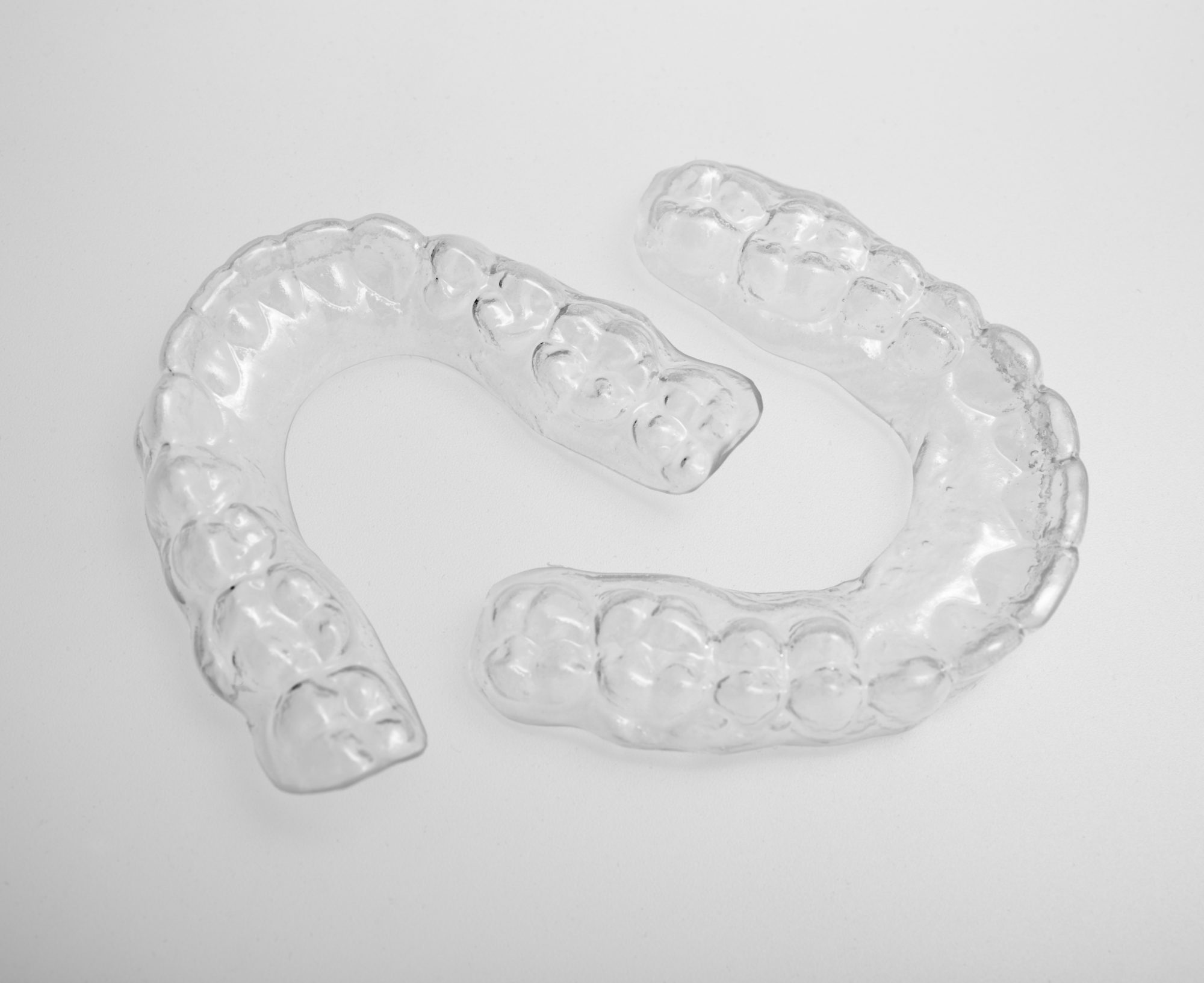
Removable, nearly invisible aligners designed by the dentist who treats patients with them, and produced by AMIsalign, the clinic's own aligner system.
Why AMIsalign
MFDS-certified
Our own aligner system, certified as a medical device by Korea's Ministry of Food and Drug Safety and produced by AMIsalign under a GMP-certified process.
Built on a large digital dataset
Treatment plans are designed in 3D CAD/CAM software, drawing on a scan dataset of more than 8,000 cases, and reviewed by a dentist before anything is manufactured.
Costs explained up front
You receive the scope, an estimated timeline and the cost of treatment before you decide, with no importer or distributor markup built into the price.
Who we usually assess for AMIsalign
Whether aligners suit you, and which program fits your case, is decided only after an examination or online photo assessment.
Protruding teeth
Front teeth or the whole bite that tilts forward.
Crowded teeth
Teeth that overlap because of limited space in the jaw.
Gaps between teeth
Spaces between front or back teeth.
Bite problems
Crossbite, open bite or deep bite, including more complex cases planned with attachments or combined with fixed appliances.
How treatment works
Consultation and diagnosis
Examination, photos and X-rays to confirm whether aligners are suitable and which program fits your case.
Digital scan and plan
A 3D scan of your teeth and a step-by-step digital plan you can review before any aligner is made.
Aligners
You typically receive 3 to 4 aligner sets per visit and switch to the next set roughly every 2 to 3 weeks, as instructed.
Check-ups and retention
Progress checks every 1 to 2 months depending on your plan, then a retainer at the end of active treatment to help hold the result.
How an aligner moves a tooth
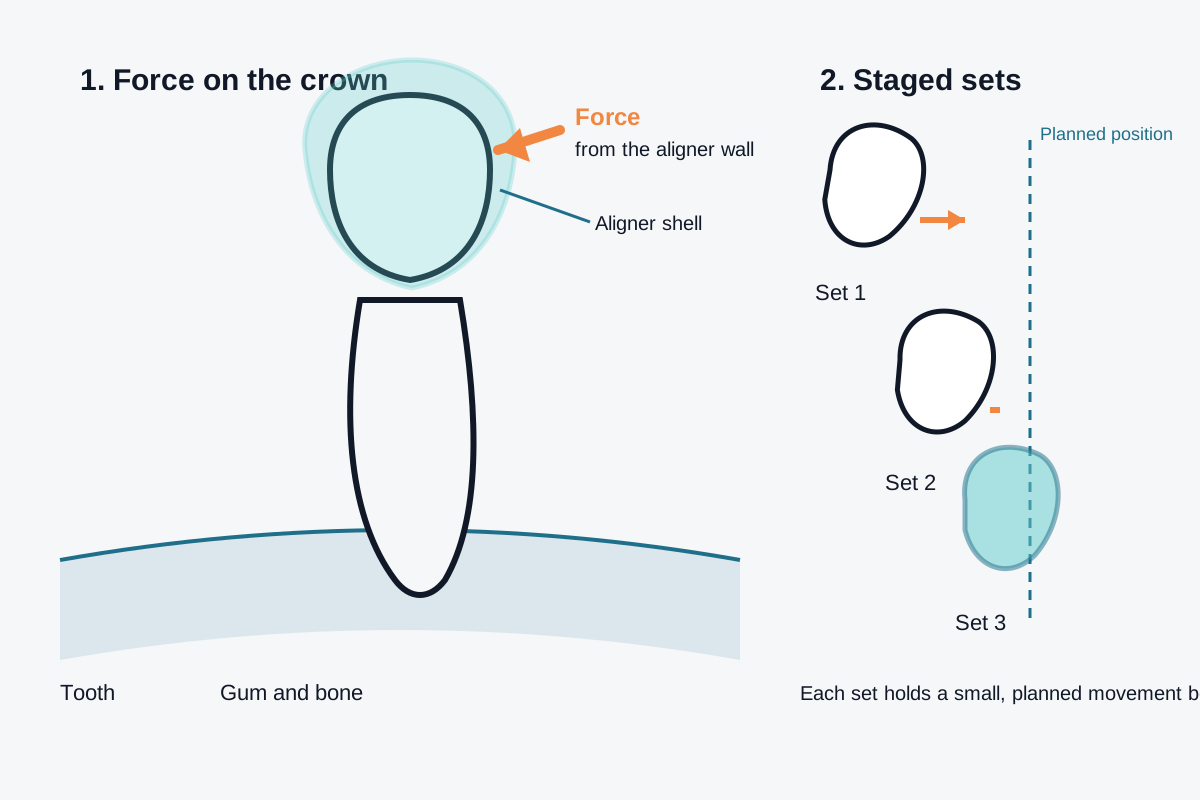
Each AMIsalign tray is shaped slightly ahead of where your tooth is right now. Wearing it keeps a light, steady pressure on the tooth; your dentist plans how many trays that movement takes before any aligner is made.
Pressure on the crown, not the root
The aligner shell presses gently on the crown of the tooth; the bone around the root remodels over time to let the tooth follow.
One small, planned step per set
Each set is designed to move a tooth a small amount — not all at once. Switching sets on schedule, not early, is part of how the plan works.
The full sequence is reviewed first
Your dentist checks the complete, stage-by-stage sequence against your digital plan before a single tray is manufactured.
Attachments on your teeth
Some plans use small, tooth-coloured attachments bonded to specific teeth, giving the aligner extra grip for harder movements such as rotating or lifting a tooth.
Whether your plan needs attachments, and how many, is decided when your digital plan is reviewed with you.
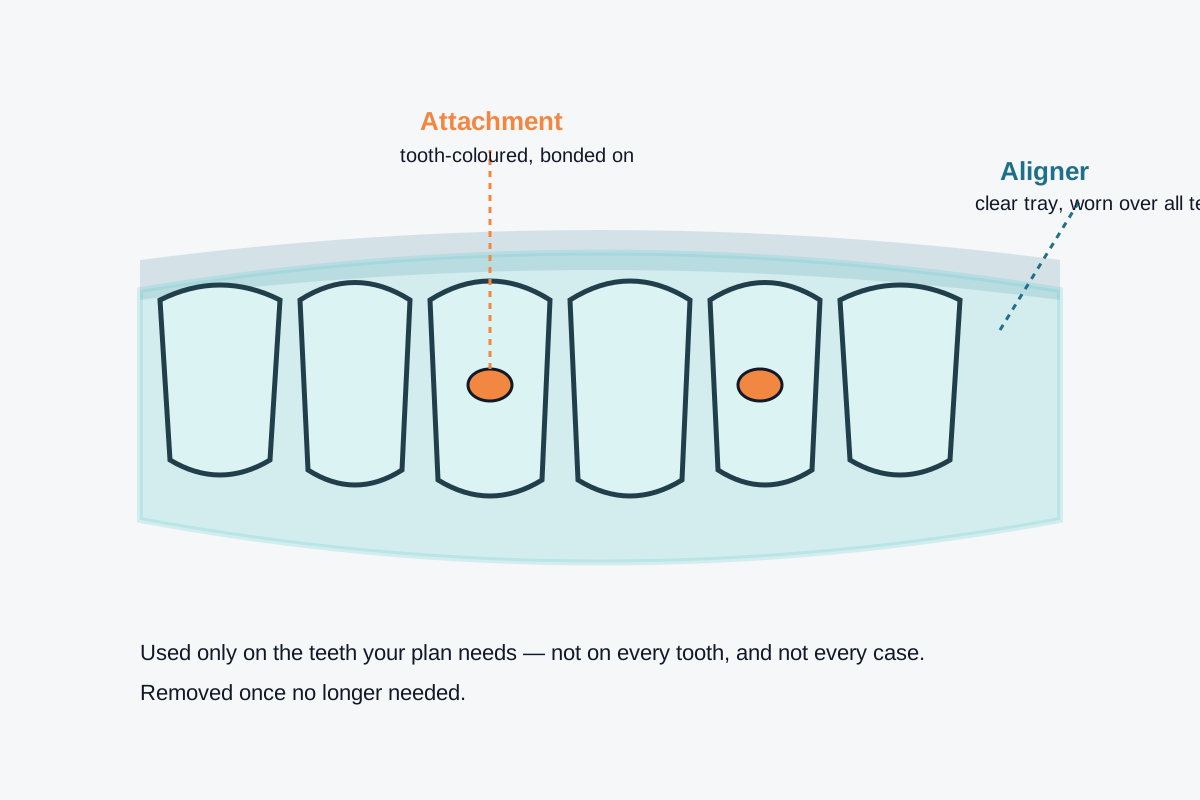
- Placed only on the teeth your plan needs — not on every tooth, and not in every case
- Tooth-coloured composite, bonded directly to the enamel
- Usually hard to notice once the aligner is in place
- Removed once that stage of movement is finished
Daily life with your aligners
How closely you follow these habits is what most affects how your plan proceeds.
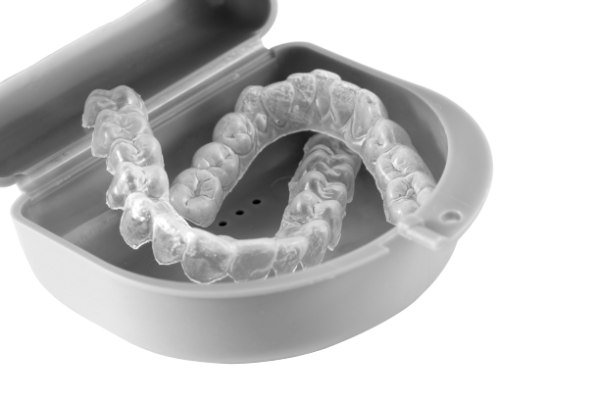
- Wear your aligners about 20 to 22 hours a day
- Remove them to eat or drink anything other than water
- Rinse with cool water and brush gently before putting them back in
- Carry your case when travelling so a removed aligner is never left loose
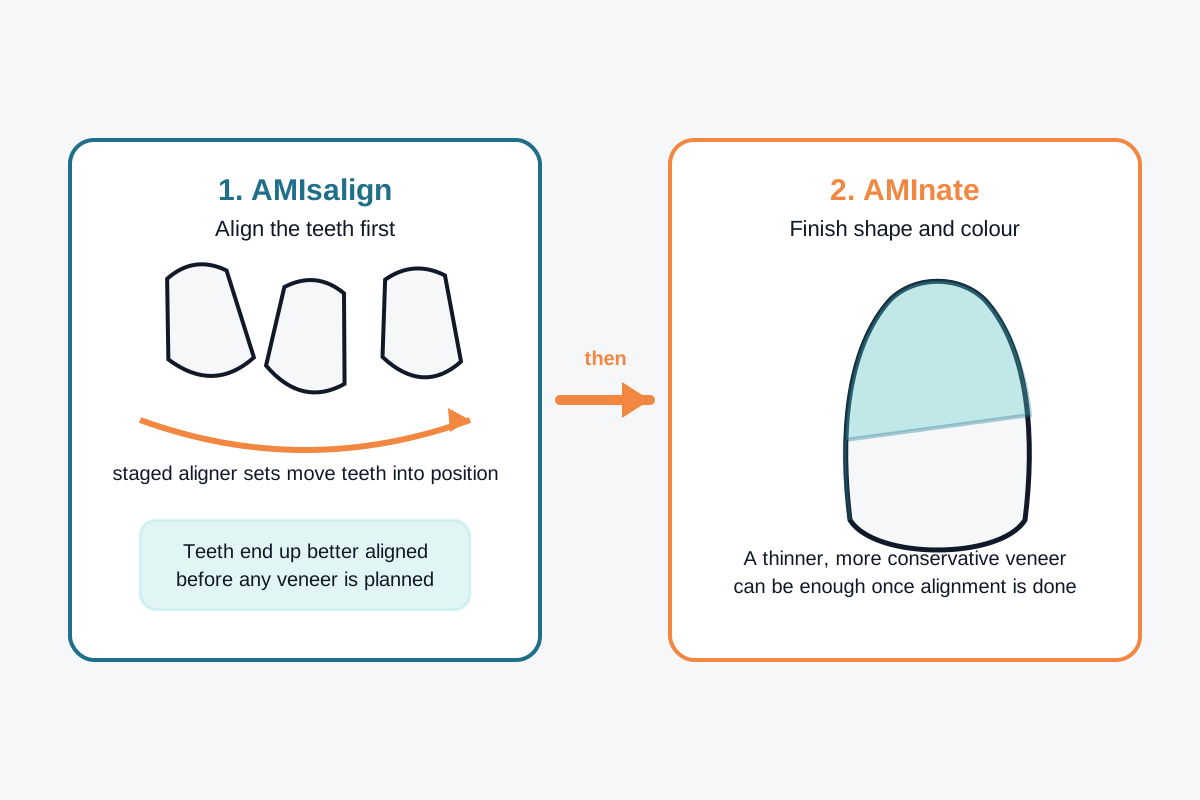
Aligners first, then AMInate: a combined smile path
For some patients, AMIsalign and AMInate veneers are planned together rather than separately.
Moving teeth into a better position with AMIsalign first can mean less of the natural tooth needs to be removed later — so a thinner, more conservative AMInate veneer can be enough to finish the shape and colour. This is planned case by case with your dentist, not applied automatically.
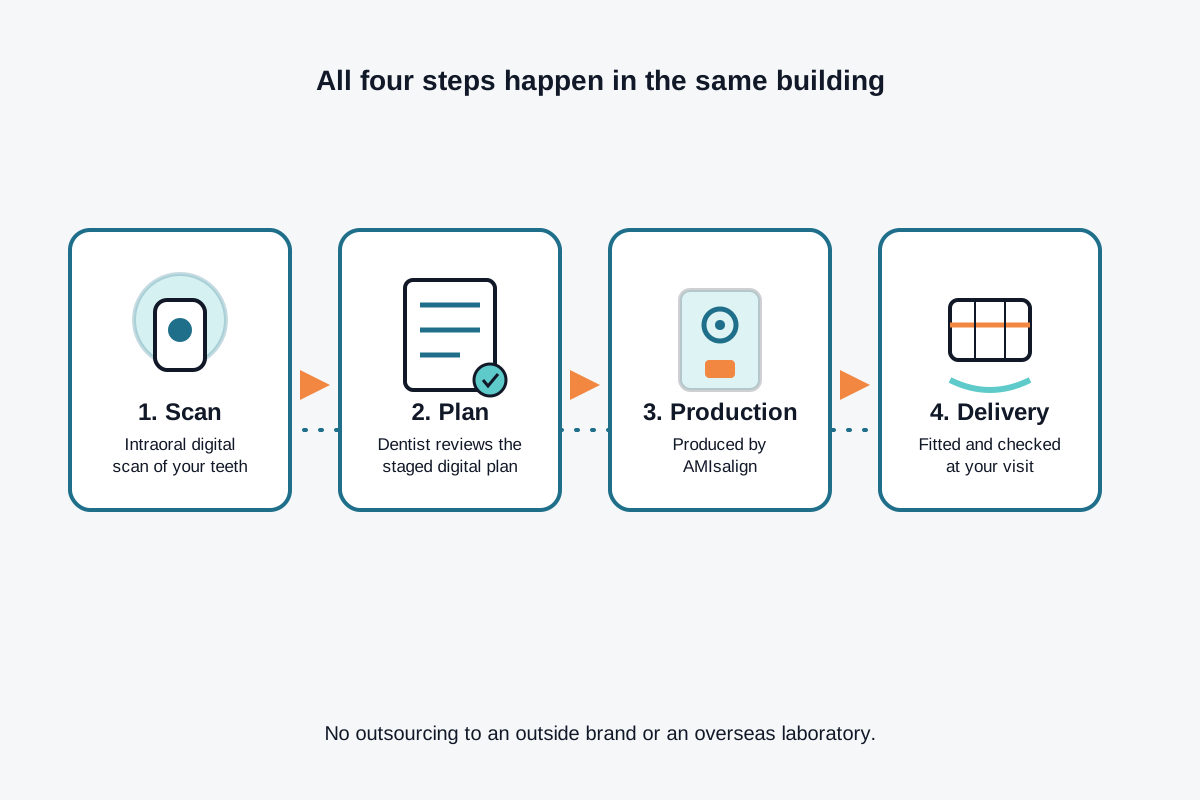
Designed by the clinic, produced by AMIsalign
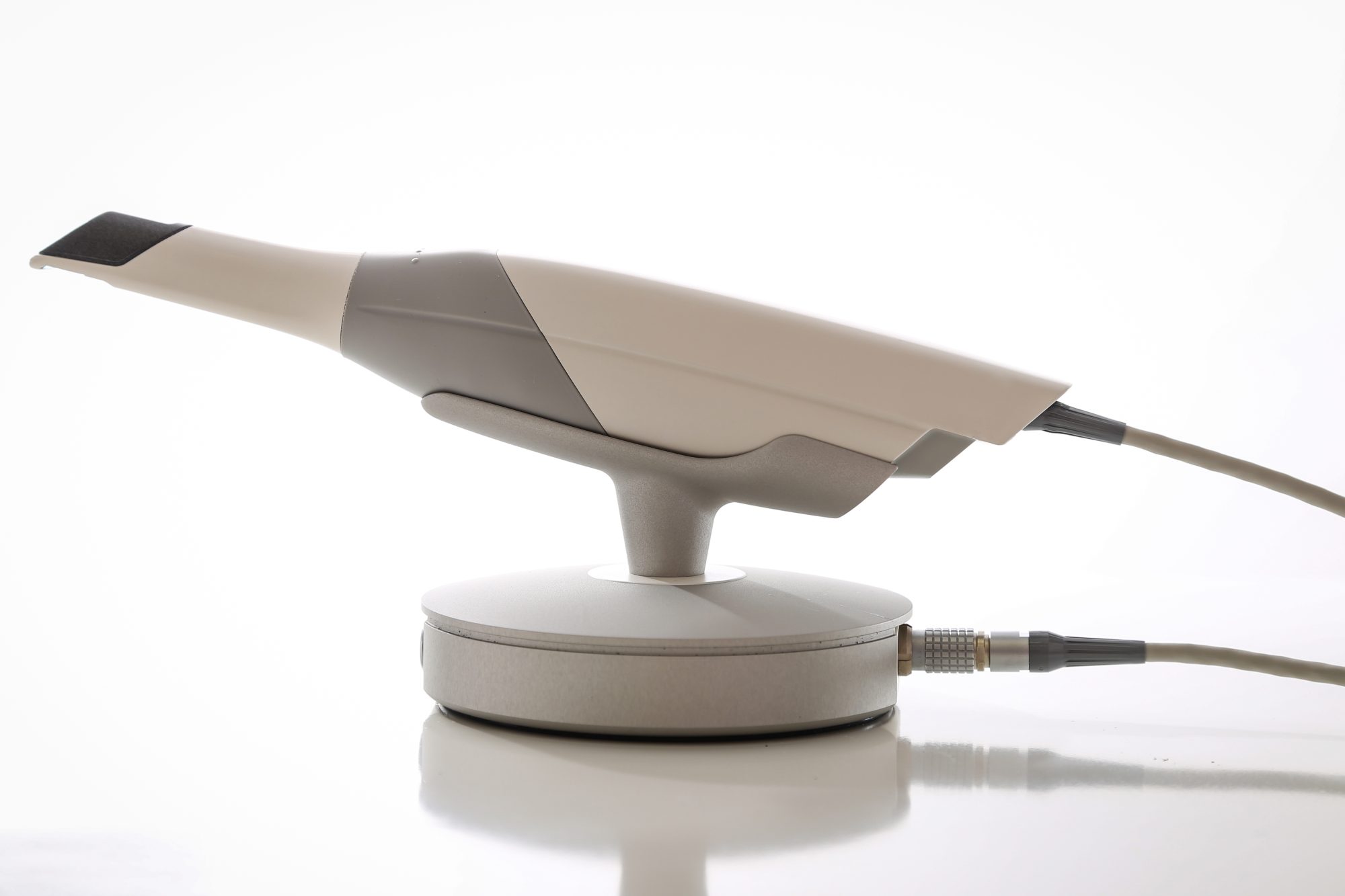
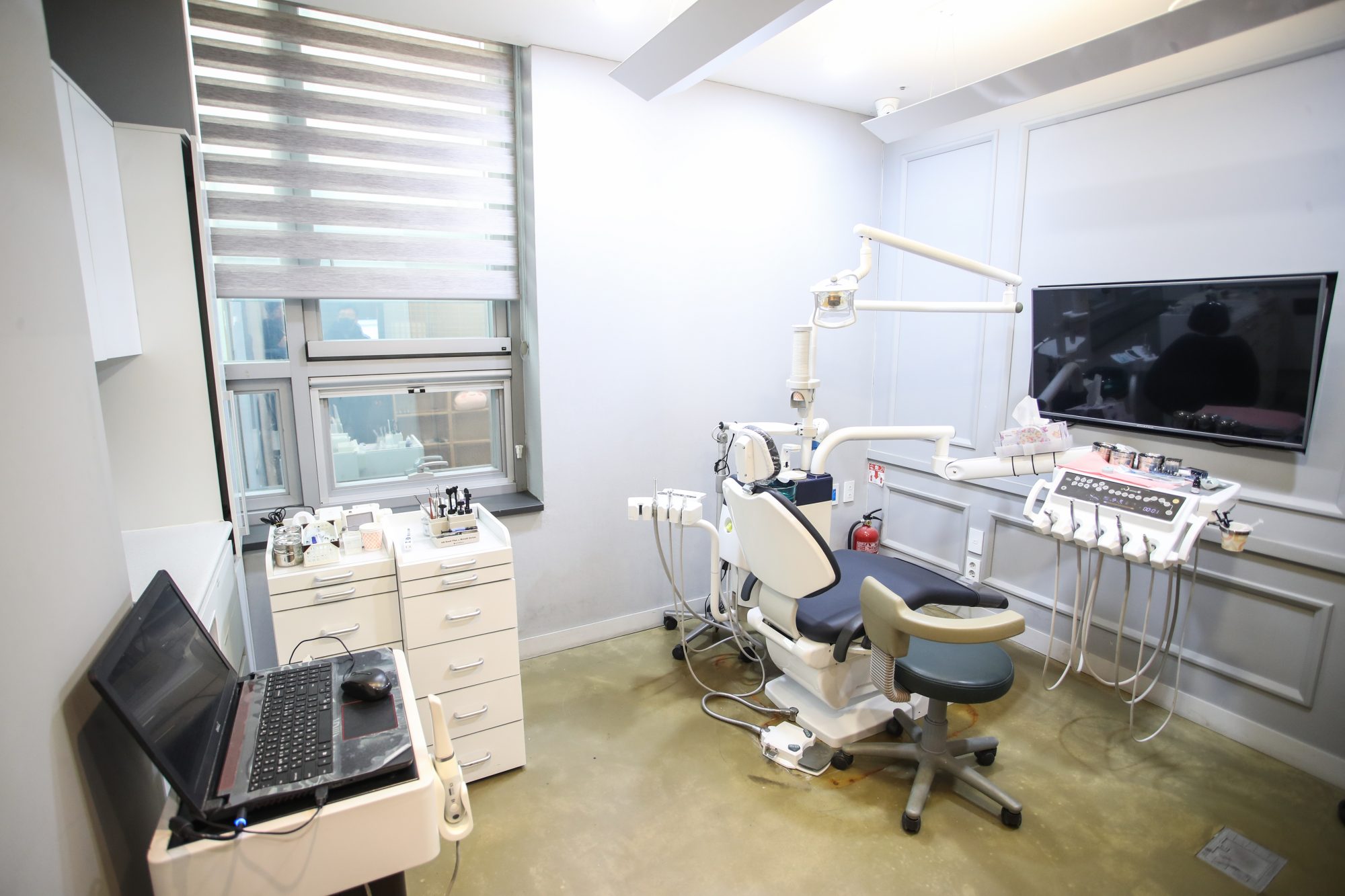
Scan, plan and production all happen at D1 Dental Clinic — nothing is outsourced to an outside brand or an overseas laboratory.
Programs by age and case
AMIsalign is organized into a few programs so treatment planning matches the patient, not just the teeth.
AMIsalign Kid & Teen
For children and teens roughly 5 to 13 years old, used to guide developing bites.
Adult, straightforward cases
For adults with mild to moderate crowding, spacing or protrusion.
Complex and extraction cases
For cases that need extraction or more extensive movement, often combined with attachments or fixed appliances.
Older patients with reduced gum support
A program adapted for patients whose gum and bone support needs a gentler, closely monitored movement plan.
AMIsalign for patients from abroad: start in one visit, follow up remotely
Open to individual applicants of any nationality. Treatment starts on the day you visit Seoul and continues with remote check-ins after you return home.
Some cases need a second visit for refinements or attachments; this is explained at the review.
Before you travel: photo assessment
Send photos through the online assessment. A dentist reviews whether your case suits aligners and what the plan would involve.
Day 1 in Seoul: scan, plan and first aligners
Digital scan and X-ray, the plan is reviewed with you, attachments are placed where needed, and your first aligners are fitted the same day.
Take your sets home
You leave with the aligner sets for the coming months and written instructions in your language.
After you return: remote check-ins
You send photos at the scheduled intervals and the dentist reviews them, confirms when to move to the next set and plans any refinement.
AMIsalign cases
Shared with each patient's written consent. Results vary from person to person.
Open bite improved with AMIsalign (sample 3)
 Before
 After
Spacing closed with AMIsalign (sample 2)
BeforeAfterCrowding corrected with AMIsalign (sample 1)
BeforeAfter
Frequently asked questions
Am I a candidate for AMIsalign?
It depends on your teeth, gums and bite. A dentist confirms suitability after an examination or an online photo assessment.
How long does treatment take?
Typical cases run about 6 to 8 months; more complex cases can take 10 to 12 months or longer. These are typical ranges — your treatment plan gives you a personal estimate.
How many hours a day do I wear the aligners?
Most plans ask for about 20 to 22 hours a day. Your dentist gives you exact instructions for your case.
Does it hurt?
You may feel pressure or mild discomfort for a few days after switching to a new set. Tell us if it does not settle.
Can I be treated if I live abroad?
Yes, in many cases. See remote AMIsalign treatment for how assessment, shipping and check-ins work.
How much does it cost?
Cost depends on the scope of treatment and which program fits your case. We explain it before treatment starts.
Will I need attachments?
Some plans use small, tooth-coloured attachments bonded to specific teeth to help move them more precisely. Not every case needs them; your dentist tells you when your digital plan is reviewed.
Can AMIsalign be combined with other treatments?
Some more complex bite cases are planned alongside other options, including fixed appliances or the surgical-orthodontic approaches described on our orthodontics pages. Your dentist tells you if your case would benefit from this.
Can I combine AMIsalign with veneers?
Yes, in some cases. Aligning teeth first with AMIsalign can mean a thinner AMInate veneer is enough to finish the shape and colour afterwards. This is planned together with your dentist, not an automatic add-on.
Talk to us about AMIsalign
Book a consultation in Seoul or start with an online photo assessment.
Treatment plans, duration and costs depend on each patient's oral condition. Side effects such as pain, tooth sensitivity or gum inflammation may occur. Treatment is decided only after a dentist has examined you.